Orchestrating
- For workflows that require top-level coordination across several subordinate tasks or prompts, especially when sequencing or dependency management is needed.
- Useful when synthesizing or collating partially processed data from multiple sources.
- Well-suited for complex automations that aren’t purely linear or parallel, but involve multiple interdependent steps.
Example
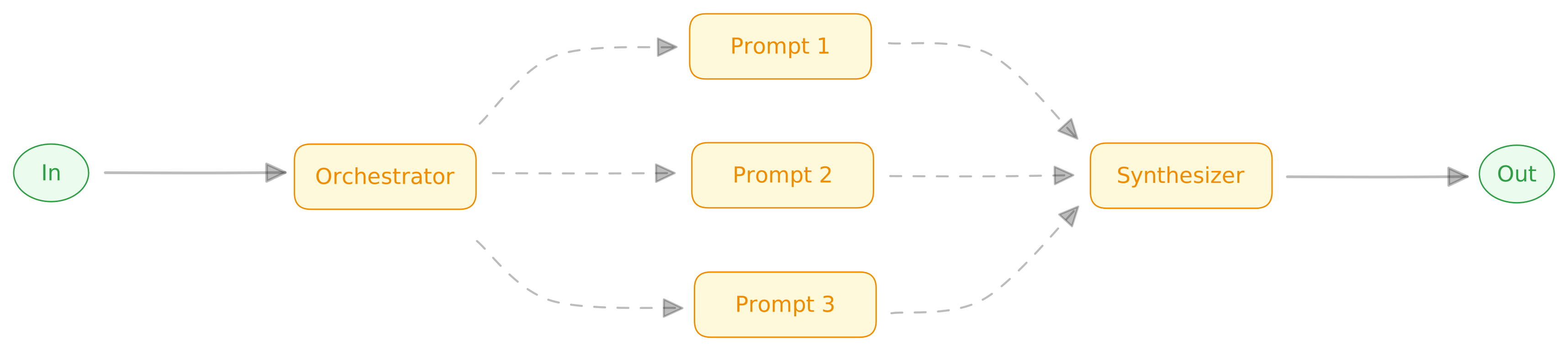
- An Orchestrator prompt receives a research question.
- The question is sent to several different prompts (e.g., web search, database lookup, internal document scan).
- Each prompt returns findings or insights, possibly updating the orchestrator with feedback.
- All results are synthesized by a final prompt into an executive summary and returned as the output.